At first glance, most tenant insurance programs look the same. They protect tenants’ stored belongings, collect a monthly premium, and satisfy a facility’s insurance requirements.
Yet how those programs are managed can significantly impact participation, recurring revenue, and long-term business performance.
While two programs may offer similar protection to tenants, they can generate very different outcomes for the facility itself. One simply provides coverage and continues running in the background. The other is actively managed to improve participation, strengthen compliance, and increase recurring revenue over time.
That’s the difference between a passive and a performance-based tenant insurance program that self-storage operators run.
In this blog, we’ll compare how both models work, why the distinction matters for your bottom line, and what to look for when evaluating whether your current tenant insurance program is helping your facility reach its full revenue potential.
What Is a Passive Tenant Insurance Program for Self Storage Facilities?
A passive tenant insurance program for self-storage facilities is usually implemented during onboarding and then left to operate with minimal ongoing oversight. Rather than being managed as a revenue-generating initiative, it becomes a routine part of the lease process.
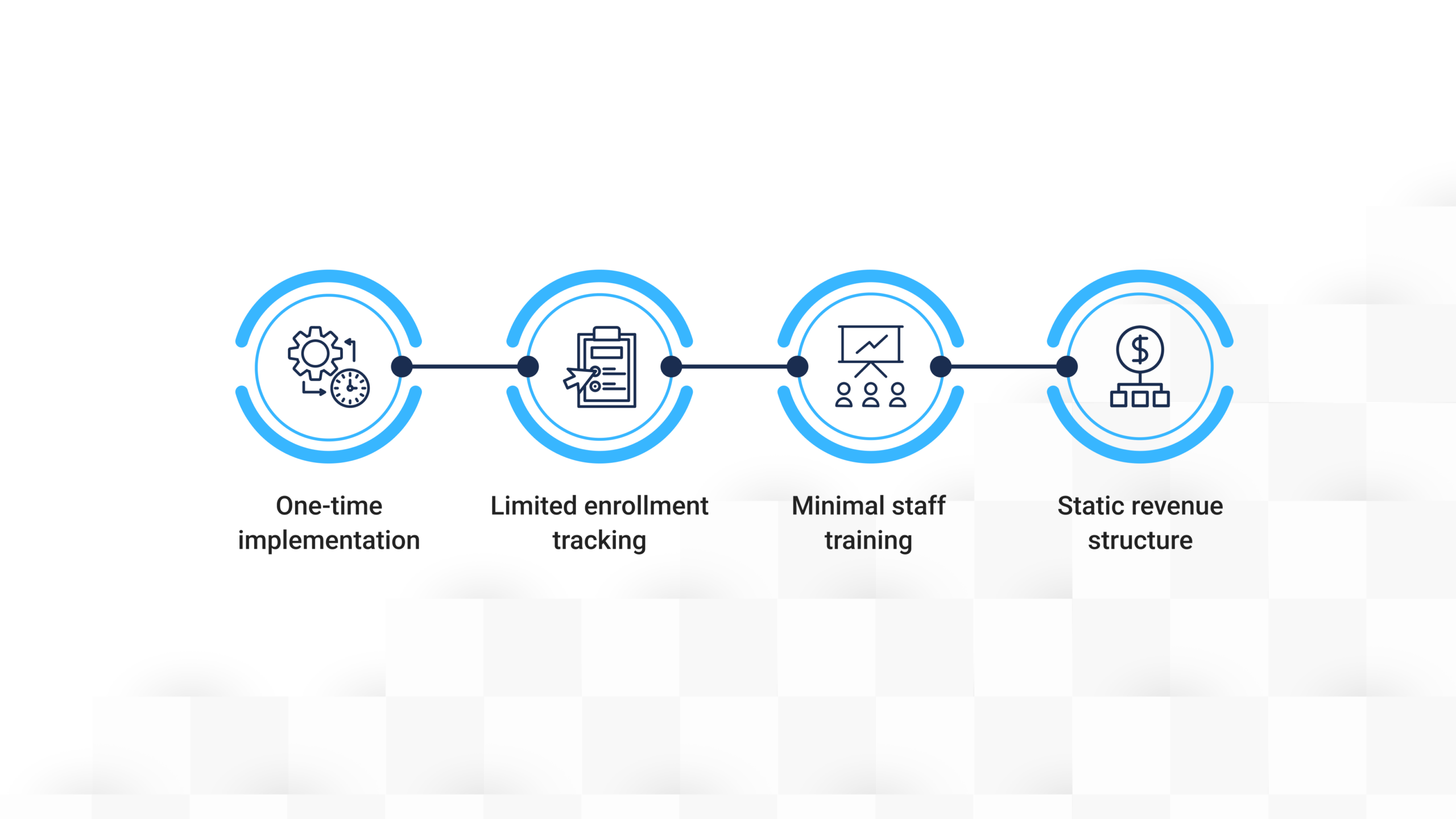
Passive programs generally share these characteristics:
- One-time implementation: Set up during rollout and rarely reviewed afterward.
- Limited enrollment tracking: Enrollment rates aren’t actively monitored or optimized.
- Minimal staff training: Training is provided initially, with few or no refreshers for new employees.
- Static revenue structure: The operator’s revenue share remains unchanged, regardless of program performance.
A passive program can still provide compliant, reliable coverage for tenants. However, without ongoing monitoring and optimization, participation often declines over time as staff changes, processes evolve, and the program receives less attention. The result is lower enrollment and missed recurring revenue opportunities.
What Is a Performance-Based Tenant Insurance Program?
A performance-based tenant insurance program is actively managed to improve participation. It is actively managed to improve participation, strengthen compliance, and maximize recurring revenue over time. Rather than being treated as a one-time implementation, it is continuously monitored and optimized to support stronger business outcomes.
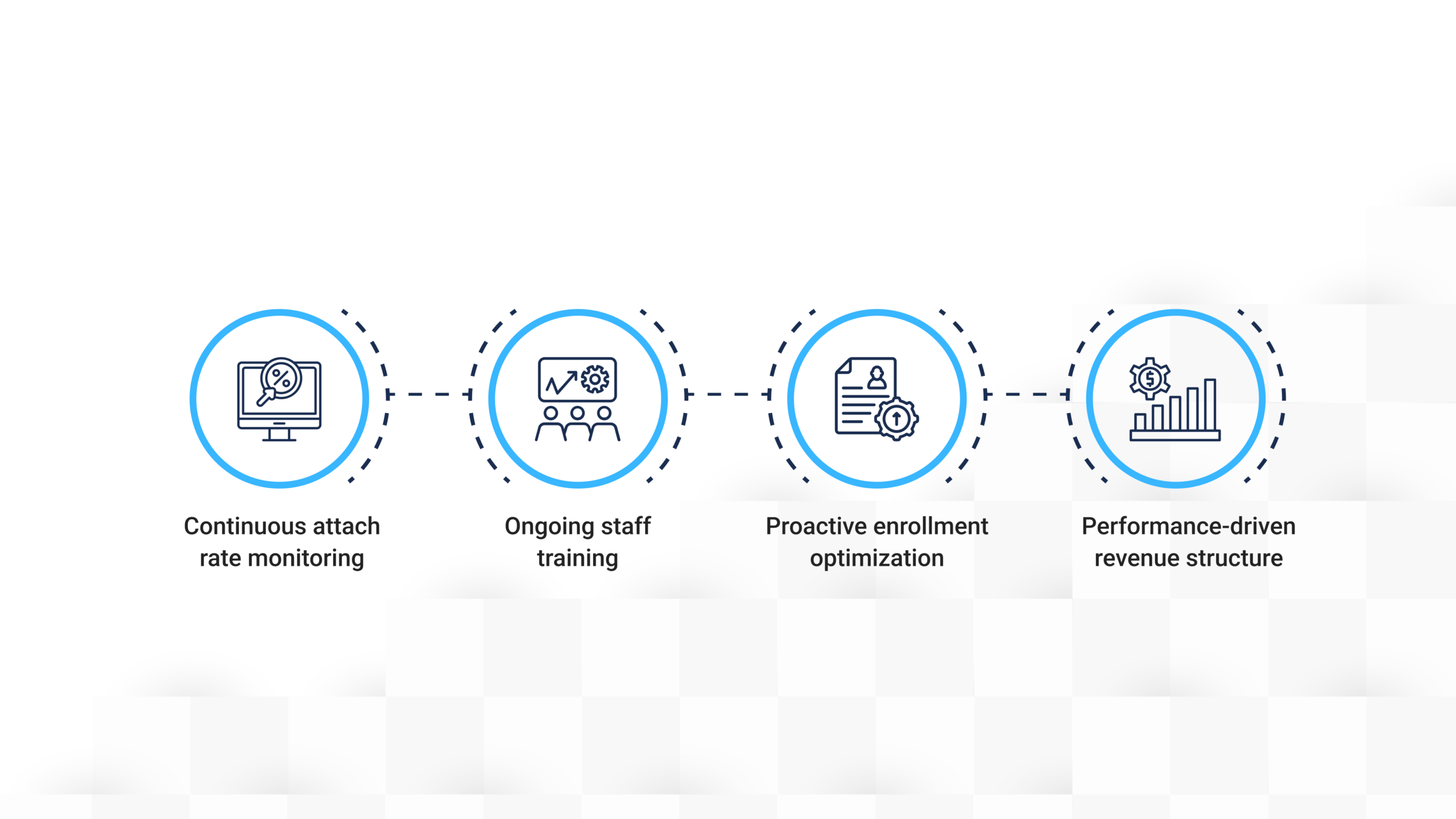
Performance-based programs include:
- Continuous enrollment rate monitoring: Enrollment is tracked regularly to identify opportunities for improvement.
- Ongoing staff training: Front-desk teams receive refreshed training and updated resources to maintain consistent enrollment practices.
- Proactive enrollment optimization: Tenant insurance is integrated into the move-in process to encourage higher participation.
- Performance-driven revenue structure: The program is designed to reward improved participation, allowing operators to benefit as enrollment grows.
Unlike passive programs, a performance-based approach treats tenant insurance as an ongoing operational and revenue initiative.
These characteristics aren’t just best practices in theory. They’re the foundation of modern performance-based tenant insurance programs, including SBOA’s Fortified Tenant Insurance Program, which was developed specifically to help self-storage operators improve participation, strengthen compliance, and drive long-term recurring revenue.
Passive vs. Performance-Based Tenant Insurance Programs Side-by-Side Comparison
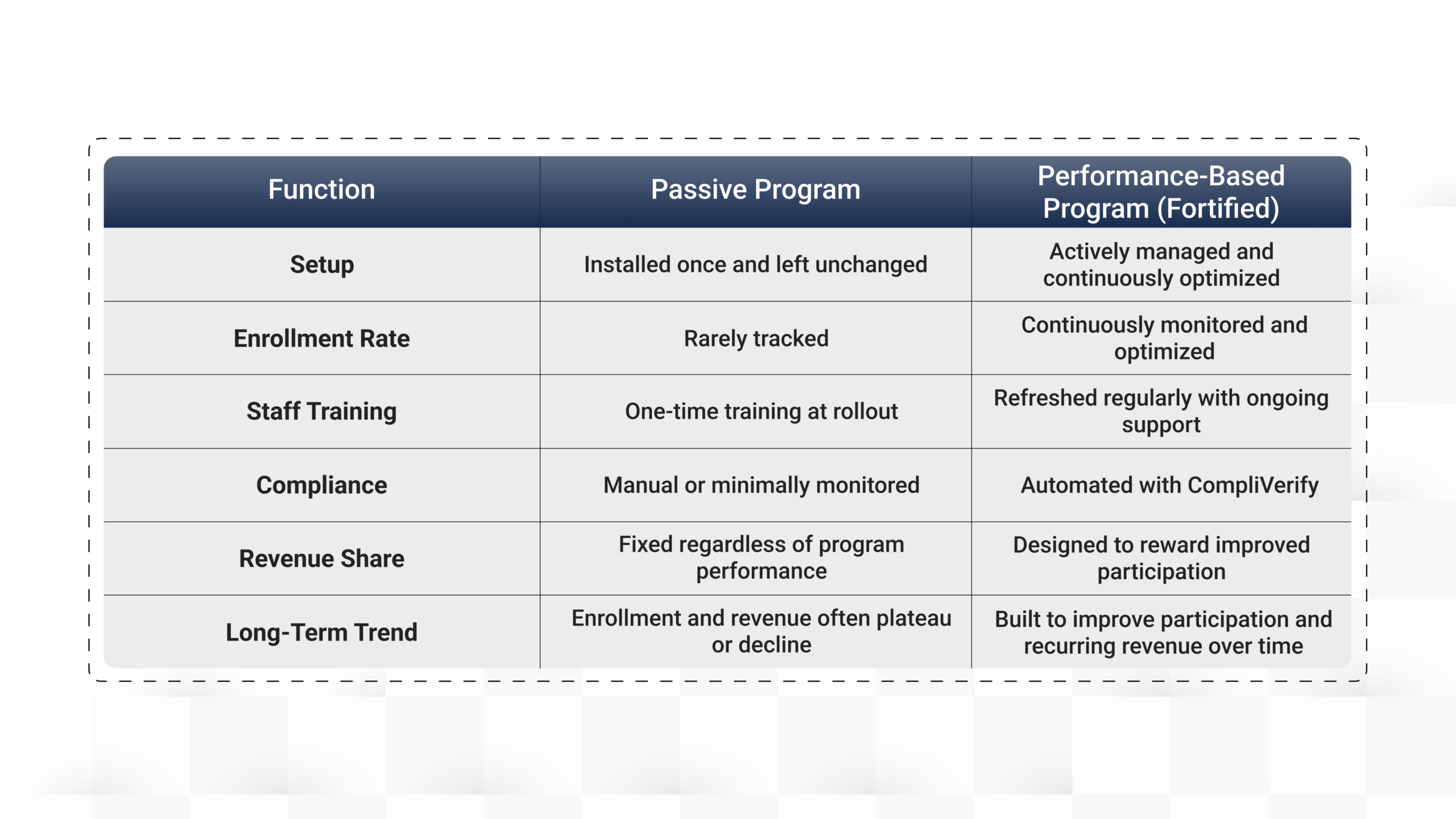
The real difference between passive and performance-based tenant insurance isn’t the policy itself. It’s how the program is developed to improve participation, maximize revenue, and support your facility over time.
How Program Structure Impacts Revenue
The financial impact of a tenant insurance program comes down to two key variables: enrollment rate and net revenue per enrolled unit.
The formula doesn’t change. What changes is how each program influences the inputs.
A passive program leaves enrollment rate and enrollment largely to chance, while a performance-based program actively works to improve both through ongoing monitoring, staff training, compliance management, and continuous optimization.
How the Difference Adds Up
Consider two identical 300-unit facilities, each starting with a 55% enrollment rate.
| Performance Factor | Passive Program | Performance-Based Program |
|---|---|---|
| Initial Occupancy | 300 Units | 300 Units |
| Starting Enrollment Rate | 55% | 55% |
| Enrollment Rate Over Time | Gradually declines, or at best, maintained | Improves |
| Enrollment Management | Little or no oversight | Continuously monitored |
| Staff Training | One-time rollout | Ongoing refreshers |
| Compliance | Manual or inconsistent | Actively managed |
| Long-Term Revenue | Plateaus or declines | Continues to grow |
| Impact on NOI | Limited | Stronger recurring NOI |
Over time, even small improvements in enrollment rate can create a meaningful difference in recurring revenue. While both facilities started from the same position, the performance-based program is designed to sustain participation and strengthen NOI as the business grows.
The impact of program structure isn’t always obvious day-to-day. In many cases, the difference only becomes clear when facilities compare enrollment trends, recurring revenue, and long-term performance.
So, how can you tell which type of program your facility is running?
Is Your Tenant Insurance Program Passive or Performance-Based?
Passive programs rarely identify themselves as passive. The easiest way to evaluate your current program is to ask a few simple questions:
- Has your facility’s enrollment rate been reviewed in the last 12 months?
- When was your team’s tenant insurance training last refreshed?
- Is there a dedicated person responsible for monitoring program performance?
- Does your revenue improve as participation increases, or has it remained unchanged since the program was implemented?
If you’re unsure how to answer one or more of these questions, your facility may be operating a passive tenant insurance program that self-storage teams installed without realizing it.
That’s not uncommon. Many programs are designed to maintain coverage rather than actively improve participation, compliance, and recurring revenue over time.
Why Coverage Shouldn’t Be Your Only Deciding Factor
When comparing storage unit insurance options, most operators naturally focus on coverage.
Questions like these often drive the decision:
- Is the insurance for storage sufficient to protect a tenant’s belongings?
- Is the insurance for a storage unit competitively priced?
- Does the self-storage rental insurance meet state-specific requirements?
These are all important considerations, but they only tell part of the story.
From an operator’s perspective, the bigger question isn’t just what the policy covers. It’s how the program performs over time.
Two providers may offer nearly identical coverage, premiums, and policy terms, yet deliver very different business outcomes. The difference often comes down to whether the program simply exists or is actively managed to improve enrollment, maintain compliance, and maximize recurring revenue.
The takeaway is clear: when evaluating a tenant insurance program, how it’s managed can be just as important as the coverage it provides.
For self-storage operators, the best programs don’t stop at protecting tenants’ belongings. They also help improve participation, simplify compliance, and create stronger recurring revenue over time.
So, what does a performance-based tenant insurance program look like in practice?
The following example shows how SBOA Insurance’s Fortified Tenant Insurance Program applies these principles to help operators get more value from their tenant insurance program.
Why SBOA’s Fortified Tenant Insurance Program Takes a Different Approach
Most tenant insurance programs are devised to provide coverage. SBOA’s Fortified Tenant Insurance Program was built to help self-storage operators get more value from that coverage by improving participation, strengthening compliance, and supporting long-term recurring revenue.
Developed by SBOA Insurance, the Fortified Tenant Insurance Program goes beyond a traditional “set-it-and-forget-it” model, with ongoing program management and optimization designed to keep performance moving in the right direction.
What Sets the SBOA Fortified Tenant Insurance Program Apart
- CompliVerify automatically monitors compliance and identifies tenants without qualifying coverage.
- Dedicated Revenue Optimization Managers provide ongoing guidance to help improve participation and program performance.
- Continuous program optimization ensures enrollment, training, and processes evolve alongside your facility instead of remaining static.
This performance-based approach has helped make SBOA Insurance Inside Self-Storage’s Best Tenant Insurance provider year after year, while enabling operators to turn tenant insurance into a stronger contributor to recurring revenue and long-term NOI.
Achieve a Higher-Performing Tenant Insurance Program with SBOA
A tenant insurance program should do more than protect stored belongings. It should support higher participation, strengthen compliance, simplify administration, and create long-term recurring revenue for your facility.
At SBOA Insurance, we partner with self-storage operators to evaluate their existing tenant insurance program, identify opportunities to improve enrollment, and implement performance-based solutions like Fortified that help maximize both operational efficiency and revenue potential.
Backed by dedicated support, ongoing program optimization, and self-storage expertise, SBOA Insurance helps facilities get more value from every enrolled tenant.