

- Tenant insurance creates recurring revenue without relying on higher rents, new tenants, or additional marketing spend.
- Two metrics drive revenue: your enrollment rate and net revenue per enrolled unit. Improving either can significantly increase NOI.
- Small improvements compound quickly. Higher enrollment rates can add thousands to annual NOI across facilities of all sizes.
- A well-structured tenant insurance program can improve recurring income, support compliance, and increase your property’s long-term valuation.
- SBOA Insurance helps operators maximize revenue potential with purpose-built tenant insurance programs, dedicated support, and self-storage expertise.
Every self-storage operator wants to improve NOI. The challenge is that traditional strategies for improving NOI, such as increasing occupancy, raising rental rates, or cutting costs, become increasingly difficult over time.
But what if there was another revenue stream that didn’t depend on finding new tenants or charging existing ones more?
That’s where tenant insurance comes in.
Most operators can tell you their occupancy rate to the decimal place. Far fewer know how much revenue their tenant insurance program actually contributes or how much more it could generate with the right structure.
Unlike rental income, tenant insurance revenue grows from the tenants already in your facility. When managed well, it becomes a predictable source of recurring income that supports both monthly cash flow and long-term NOI.
In this blog, we’ll show you the math behind tenant insurance revenue, what drives it, where facilities commonly miss opportunities, and how even subtle improvements can increase both NOI and your property’s long-term value.
Why More Operators Are Prioritizing Tenant Insurance Revenue
Most self-storage operators focus on growing revenue through street rates, existing customer rate increases (ECRI), and occupancy. While effective, these strategies come with trade-offs. Raising rates can increase move-outs, while filling vacant units requires ongoing marketing investment and acquisition costs.
Tenant insurance revenue works differently. Instead of creating new demand, it generates value from existing tenant relationships with minimal operational effort.
Here’s what makes it different:
- Collected alongside monthly rent, creating a predictable recurring revenue stream.
- Integrated into your management software, making administration simple.
- Requires little ongoing overhead once the program is in place.
- Doesn’t rely on additional marketing spend or new customer acquisition.
- Scales naturally as occupancy grows, rather than depending on constant rate increases.
Unlike rental revenue, you’re not competing with another facility for every dollar. The opportunity already exists within your existing tenant base.
Significance of Tenant Insurance Revenue
Many facilities treat tenant insurance revenue as a secondary line item instead of actively managing it. But revenue that isn’t measured is rarely optimized.
Modeling your tenant insurance revenue helps you understand:
- Current program performance
- Revenue opportunities you’re missing
- The long-term contribution to NOI
- Whether your current provider is delivering maximum value
It’s Becoming the Industry Standard: Tenant insurance is no longer viewed as an optional add-on. Many leading self-storage operators, including Extra Space Storage, require tenants to either provide proof of insurance or enroll in a tenant property protection program as part of the lease.
As tenant protection becomes standard practice across the industry, the competitive advantage no longer comes from whether you offer a program, but from how well it’s structured and how much recurring revenue it contributes to your business.
What Determines Your Tenant Insurance Revenue?
Before you can project your own self-storage tenant insurance revenue, you need two inputs specific to your facility. Everything else in this article is just these two numbers multiplied out.
1. Enrollment Rate
The enrollment rate is the percentage of occupied units enrolled in your tenant insurance program. It’s the single major driver of revenue and one of the most overlooked opportunities for Improvement.
Higher enrollment rates typically come from:
- Making enrollment part of the standard move-in process
- Training staff to explain the program confidently
- Integrating enrollment into lease compliance
- Keeping the sign-up process simple
Facilities that treat tenant insurance as a standard part of move-in consistently outperform those that present it as an optional add-on.
2. Net Revenue Per Enrolled Unit
This is the amount your facility retains per enrolled unit, per month after underwriting and program costs. It’s important to distinguish this from the tenant’s monthly premium. Your net revenue depends on how your program is structured and the provider you choose.
Two facilities with the same occupancy and enrollment rate can generate very different tenant insurance revenue simply because one retains a larger share of each premium collected.
How to Calculate Self Storage Tenant Insurance Revenue?
Once you have those two inputs, the math is straightforward:
No new tenants, no rate conversations, no added marketing spend, just enrollment and structure.
This is what makes self-storage tenant insurance revenue one of the more attractive levers available to an operator: the ceiling is set by process and program quality, not by market conditions.
Self Storage Tenant Insurance Revenue Across Facility Sizes & Enrollment Rates
To see how these two inputs compound, we’ve added an illustrative model across three facility sizes, each run at a lower and a higher enrollment rate.
We’ll use $6 in net monthly revenue per enrolled unit in all scenarios.
| Facility Size | Occupied Units | Enrollment Rate | Enrolled Units | Annual NOI Impact |
|---|---|---|---|---|
| Small | 150 | 50% | 75 | $5,400 |
| Small | 150 | 75% | 113 | $8,136 |
| Mid-Size | 300 | 50% | 150 | $10,800 |
| Mid-Size | 300 | 75% | 225 | $16,200 |
| Large | 500 | 50% | 250 | $18,000 |
| Large | 500 | 75% | 375 | $27,000 |
(Note: These are round, hypothetical figures meant to show how self-storage tenant insurance revenue scales, not a benchmark for what any specific program pays, since actual net revenue per unit varies by state, coverage limit, and program structure.)
The pattern holds at every size: moving from a 50% to a 75% enrollment rate doesn’t just add self-storage tenant insurance revenue in a straight line; it adds roughly half again as much as the facility was already generating.
That’s the financial upside of maximizing participation, and it’s available without changing occupancy, rent, or unit mix at all.
For a portfolio operator running this math across multiple locations, the difference between the low and high ends of that range, multiplied across every facility, is often larger than most single-property rate increases could ever produce.
What Is Limiting Your Tenant Insurance Revenue?
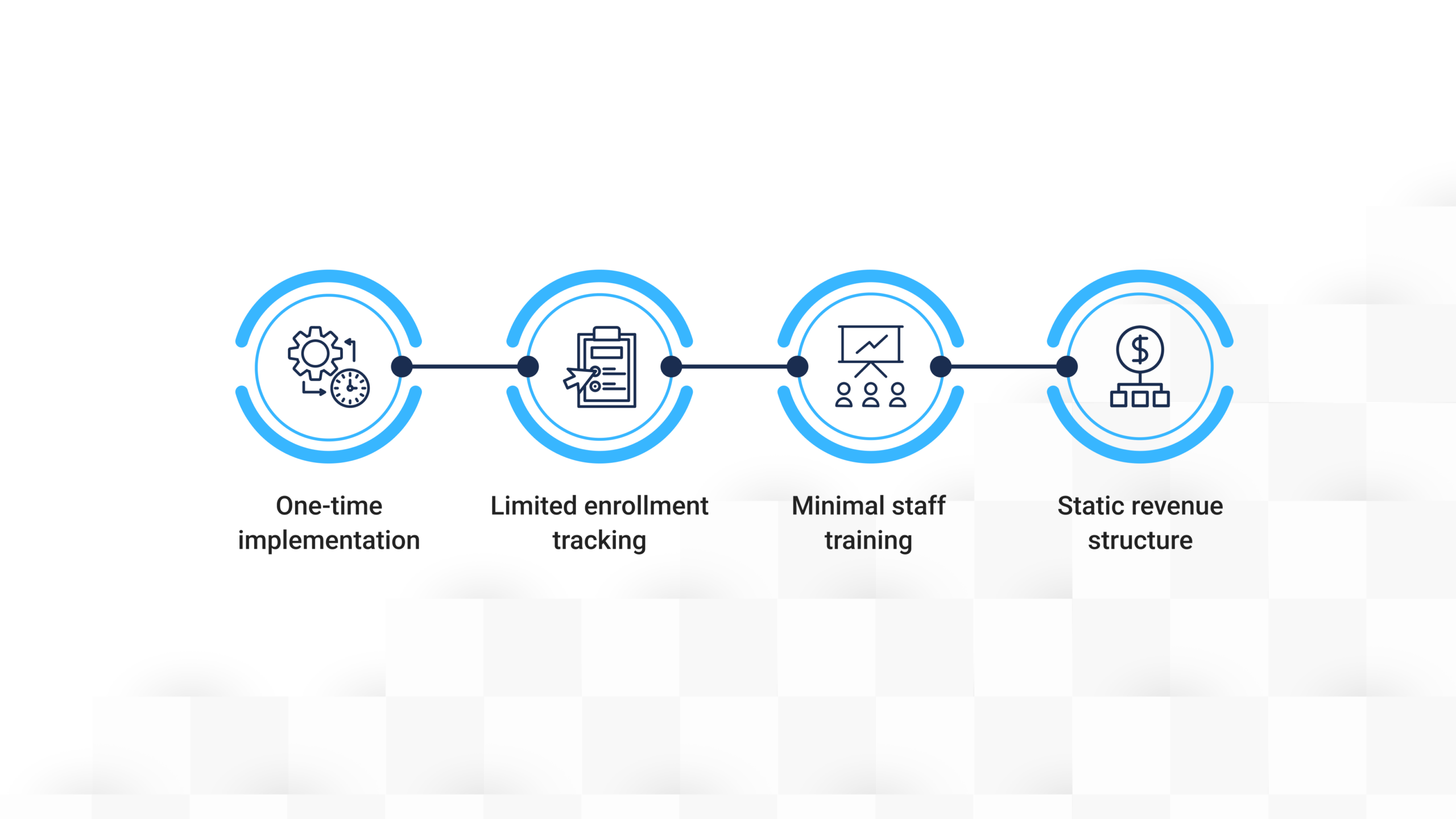
Many facilities aren’t maximizing their tenant insurance revenue, often because of a few avoidable process gaps.
- Enrollment treated as optional at move-in: When tenant insurance is mentioned, only if a customer asks, enrollment rates stay low, almost by design. Facilities that build enrollment into the standard move-in script, the same way ID verification or unit selection is a standard step, consistently outperform.
- Inconsistent staff training: Front-desk teams that aren’t confident in explaining the program or answering the common “does my homeowners’ insurance already cover this?” question tend to let hesitant customers opt out rather than working through the objection.
- No lease-compliance structure: Facilities running a fully voluntary model, with no requirement to carry proof of coverage, generally see lower enrollment rates than facilities using a lease-compliance approach, where coverage is a condition of tenancy unless the tenant provides documented proof of equivalent insurance.
- Treating the program as “set & forget”: A program that was set up once, years ago, and never revisited- no refresher training, no updated marketing materials, no review of enrollment trends- tends to drift downward over time as new hires and new tenants pass through without the same reinforcement the original setup had.
The good news is that these are easy fixes. By improving a few everyday processes, facilities can increase enrollment and unlock more recurring revenue.
Why the Program Behind the Number Matters
The formula above treats “net revenue per unit” as a single input, but that number isn’t fixed; it’s a direct result of how the program is built. Two things affect it most, and both directly shape your self-storage tenant insurance revenue:
- Compliance structure: Protection plans, lease riders that aren’t licensed insurance products, are regulated differently than true tenant insurance, and that difference isn’t just legal fine print. It affects what you can offer, how it’s marketed, and whether the revenue holds up under regulatory scrutiny. A number that isn’t compliant isn’t a reliable number, no matter how attractive it looks on paper today.
- Revenue share: The percentage of premium an operator retains varies significantly by provider. It’s worth asking directly: what’s your share, does anyone take a cut before you see it, and how does that compare to a program purpose-built for operators rather than adapted from a generic template?
This is where SBOA Insurance stands apart. SBOA Tenant Insurance was founded in 2011 by self-storage owners, for self-storage owners, not retrofitted from a generic insurance template, and has been named Best Tenant Insurance by Inside Self-Storage every year since.
Through the Fortified Tenant Insurance Program, SBOA Insurance provides operators with a fully compliant, true tenant insurance solution engineered to increase enrollment and protect self-storage tenant insurance revenue, without the regulatory exposure that can accompany less compliant protection plan alternatives.
How SBOA Makes the Program Easy to Run
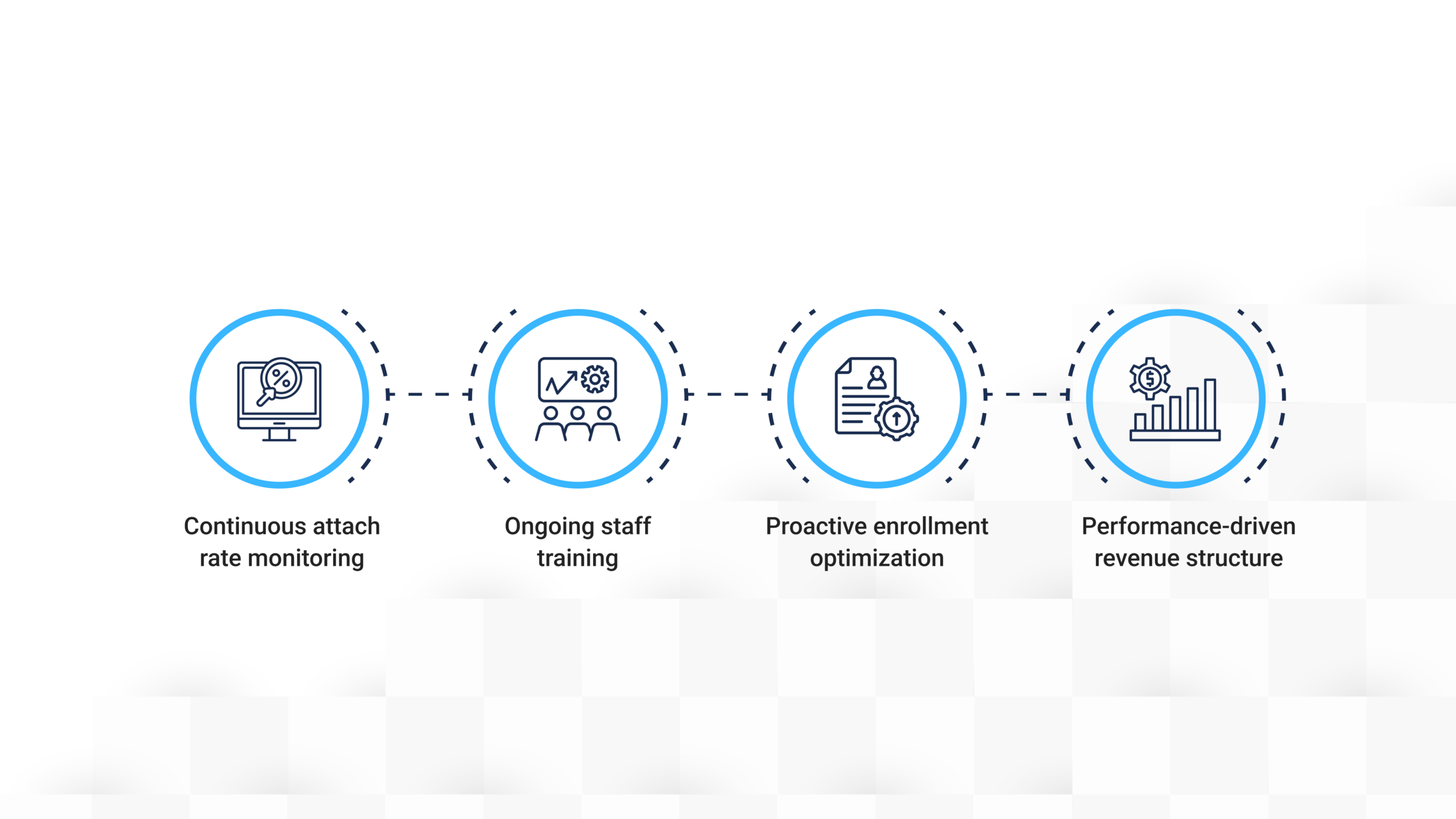
A strong program translates into strong self-storage tenant insurance revenue only if it’s easy for your team to operate day-to-day. This is typically where operators worry that the math above is theoretical, that capturing a higher enrollment rate means more administrative burden on their staff.
In practice, SBOA Insurance is built to streamline the whole process:
- Integrated billing: SBOA Insurance works with the industry’s leading facility management software providers, so in most cases, tenant insurance activity flows through your existing system without manual reporting.
- Simple invoicing: Facilities are invoiced at the start of each month for the prior month’s insurance activity, payable via free ACH or check.
- Built-in staff training: Every employee who interacts with tenants on insurance completes short, self-paced online training modules, so front-desk teams can confidently answer coverage questions without slowing down move-in.
- Marketing materials managed: Initial marketing materials are shipped automatically, with reorders available online, by email, or by phone, so promoting the program doesn’t fall on your team to design or manage.
None of this alters the math in the formula above; however, it directly affects whether a facility actually reaches its higher-enrollment-rate scenario or stays stuck near the lower one.
How Tenant Insurance Revenue Increases Your Facility’s Value
Tenant insurance revenue doesn’t just strengthen your monthly cash flow. Because it contributes to Net Operating Income (NOI), it can also increase your facility’s overall market value.
The Formula:
Example:
- Annual NOI from tenant insurance: $27,000
- Market cap rate: 6%
- Estimated increase in asset value: $450,000
A Note on This Example
The $27,000 → $450,000 example is for illustration only and does not represent actual SBOA program data or current self-storage market cap rates.
However, the valuation methodology is a widely accepted commercial real estate standard:
Property Value = NOI ÷ Cap Rate
By replacing the example figures with your facility’s actual enrollment rate, net revenue per enrolled unit, and local cap rate, you can estimate the true contribution of tenant insurance to both your annual NOI and property value.
This is the part of the conversation that’s easy to miss when you’re only looking at monthly numbers. Well-managed self-storage tenant insurance revenue isn’t just monthly cash flow; at sale or refinance, it compounds into the price your facility commands.
For operators evaluating an acquisition or planning an eventual exit, this is a line item worth underwriting carefully rather than assuming from a seller’s offering memorandum.
Maximize Your Revenue Potential with SBOA Tenant Insurance
Every self-storage facility has a different revenue opportunity. The actual value of your tenant insurance program depends on factors like occupancy, tenant participation, program structure, and coverage options.
At SBOA Insurance, we work closely with self-storage operators to help strengthen their tenant insurance program and support long-term revenue growth. Our team can help you understand where your current program stands and where opportunities for additional recurring revenue may lie.
With more than a decade of experience serving the self-storage industry, we deliver purpose-built tenant insurance programs backed by dedicated support, streamlined administration, and the expertise to help your facility perform at its best.
Talk to an SBOA Insurance specialist today and discover how the right tenant insurance program can unlock more revenue for your self-storage business.